
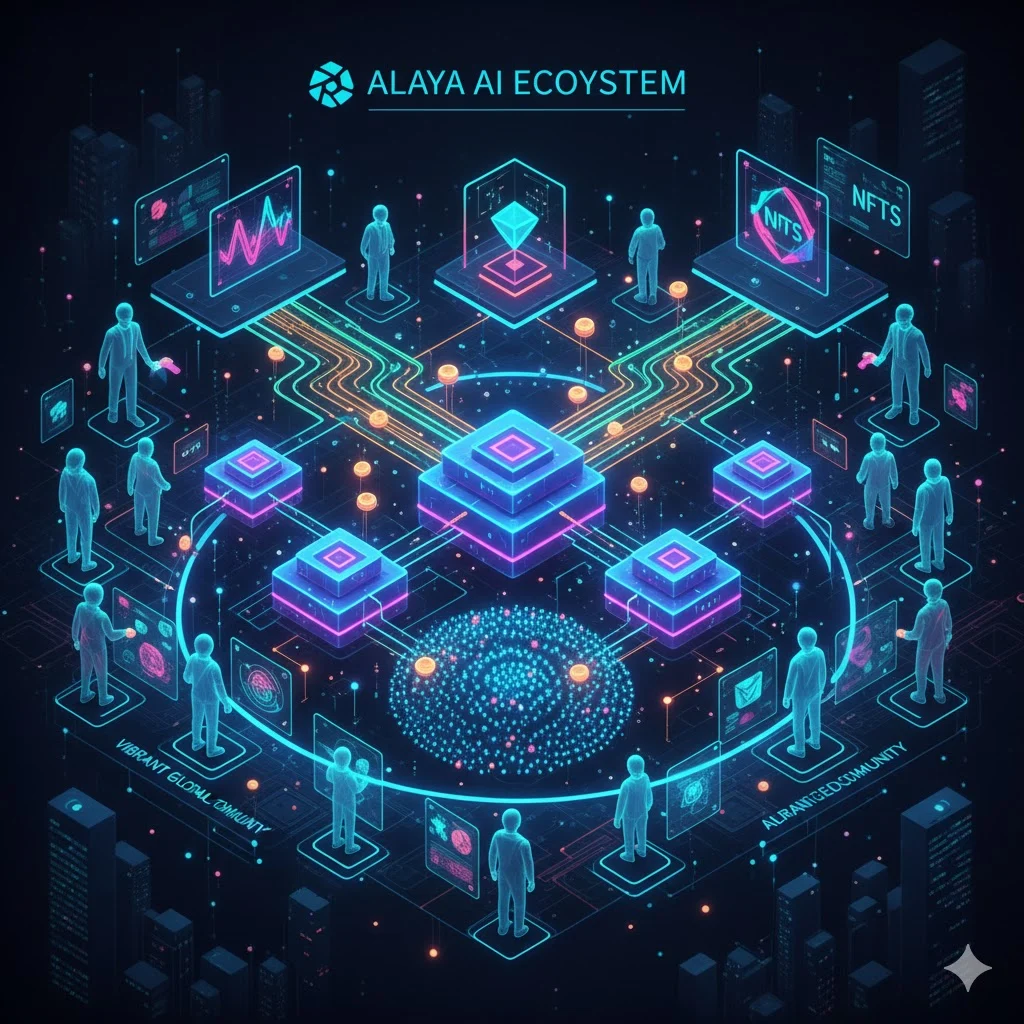
In the rapidly evolving landscape of artificial intelligence (AI), one of the most significant challenges remains the acquisition and labeling of high-quality datasets. Traditional methods often fall short in terms of scalability, accuracy, and cost-effectiveness. Enter Alaya AI, a decentralized platform that leverages blockchain technology, swarm intelligence, and gamification to transform how AI data is collected, labeled, and utilized.
This comprehensive guide delves into the intricacies of Alaya AI, exploring its features, tokenomics, governance model, and real-world applications. Whether you’re an AI enthusiast, a blockchain developer, or a data scientist, this article provides valuable insights into how Alaya AI is shaping the future of decentralized AI ecosystems.
What is Alaya AI?
Alaya AI is an open, composable Web3 data sampling and auto-labeling AI infrastructure powered by distributed communities. It aims to address the bottlenecks in AI development by providing a platform where data collection, labeling, and validation are decentralized and incentivized through blockchain technology.
Key aspects of Alaya AI include:
- Decentralized Data Collection: Utilizing a global community of contributors to gather diverse datasets.
- Blockchain Integration: Ensuring transparency, security, and traceability of data transactions.
- Swarm Intelligence: Harnessing collective intelligence to improve data quality and model accuracy.
- Gamification: Engaging contributors through tokenized rewards and interactive tasks.
Key Features of Alaya AI
Alaya AI Data Collection
Alaya AI employs a decentralized approach to data collection, enabling contributors worldwide to participate in gathering datasets. This method not only accelerates the data acquisition process but also ensures a diverse range of data sources, enhancing the robustness of AI models.
Alaya AI Data Labeling and Annotation
Data labeling is a critical component of AI model training. Alaya AI streamlines this process by:
- Crowdsourcing Labeling Tasks: Allowing a global community to label data, increasing efficiency and scalability.
- Quality Assurance Mechanisms: Implementing validation processes to ensure the accuracy of labeled data.
- Automated Labeling Tools: Utilizing AI-assisted tools to assist contributors in labeling tasks.
Swarm Intelligence in AI
Swarm intelligence refers to the collective behavior of decentralized, self-organized systems. In the context of Alaya AI:
- Distributed Problem Solving: Tasks are divided among contributors, leveraging diverse expertise.
- Adaptive Learning: The system learns and adapts based on the collective input, improving over time.
- Enhanced Accuracy: Collective decision-making leads to more accurate data labeling and model training.
AI Model Training and Validation
Alaya AI facilitates AI model training by providing high-quality labeled datasets. The platform also supports:
- Model Evaluation: Allowing developers to assess model performance using validated data.
- Continuous Improvement: Enabling iterative training processes to enhance model accuracy.
Alaya AI and Web3 Integration
Blockchain-Based AI Platform
Alaya AI integrates blockchain technology to:
- Ensure Data Integrity: Immutable records of data transactions prevent tampering.
- Facilitate Smart Contracts: Automating processes such as data validation and reward distribution.
- Enhance Transparency: Providing a transparent ledger of all data interactions.
Alaya AI NFTs and Tokenized Rewards
To incentivize participation, Alaya AI utilizes:
- NFT-Based Rewards: Contributors receive NFTs as proof of their contributions.
- Tokenized Incentives: Participants earn tokens for completing tasks, which can be traded or staked.
Alaya AI Gamification
Alaya AI incorporates gamification elements to engage users:
- Interactive Tasks: Making data labeling tasks more engaging through game-like interfaces.
- Leaderboards: Displaying top contributors to encourage healthy competition.
- Achievement Badges: Rewarding milestones and achievements within the platform.
Smart Contracts
Smart contracts automate various processes within Alaya AI:
- Task Assignment: Automatically assigning tasks to eligible contributors.
- Reward Distribution: Ensuring timely and accurate distribution of tokens and NFTs.
- Data Validation: Automating the validation of labeled data to maintain quality.
Alaya AI Tokens
ALA Token
The ALA token is the native utility token of the Alaya AI platform. It serves multiple purposes:
- Access to Premium Features: Unlocking advanced tools and functionalities within the platform.
- Staking: Allowing holders to stake tokens to participate in governance and earn rewards.
- Transaction Fees: Paying for transaction fees within the ecosystem.
AGT Token
The AGT (Alaya Governance Token) is used for:
- Governance Participation: Allowing holders to vote on platform decisions and proposals.
- Staking: Participating in staking pools to support AI model training.
- Incentivization: Rewarding contributors for their participation in the ecosystem.
Tokenomics
Alaya AI’s tokenomics are designed to ensure sustainability and growth:
- Total Supply: 5 billion AGT tokens.
- Circulating Supply: Approximately 1.79 billion AGT tokens.
- Market Capitalization: Approximately $8.18 million.
- Utility: Tokens are used for staking, governance, and rewarding contributors.
Alaya AI Marketplace
The Alaya AI Marketplace is a decentralized platform where:
- Data Sets: Users can buy and sell high-quality labeled datasets.
- Model Access: Developers can access pre-trained models for various applications.
- Token Transactions: All transactions are conducted using Alaya AI tokens, ensuring seamless and secure exchanges.
Alaya AI Governance and Community
Community Governance (DAO)
Alaya AI employs a Decentralized Autonomous Organization (DAO) model, allowing:
- Decentralized Decision-Making: Token holders vote on proposals affecting the platform’s development.
- Transparency: All decisions and voting outcomes are recorded on the blockchain.
- Community Engagement: Encouraging active participation in the platform’s growth and direction.
Contributor Engagement
The platform fosters a vibrant community by:
- Providing Educational Resources: Offering tutorials and documentation to help contributors get started.
- Hosting Challenges: Organizing competitions to encourage participation and innovation.
- Recognizing Contributions: Highlighting top contributors and their achievements within the community.
Security and Privacy
Data Privacy Compliance
Alaya AI adheres to global data privacy regulations:
- GDPR Compliance: Ensuring data protection for users in the European Union.
- Data Ownership: Users retain ownership of their data, with control over how it’s used.
- Anonymization: Implementing techniques to anonymize data and protect user identities.
Data Security
The platform employs robust security measures:
- Encryption: Utilizing advanced encryption methods to protect data at rest and in transit.
- Access Controls: Implementing strict access controls to prevent unauthorized data access.
- Audit Trails: Maintaining detailed logs of all data interactions for accountability.
Real-World Use Cases
AI Startups
AI startups leverage Alaya AI to:
- Access High-Quality Data: Obtaining labeled datasets to train models effectively.
- Reduce Costs: Lowering the expenses associated with data collection and labeling.
- Accelerate Development: Speeding up the model development process through efficient data pipelines.
Enterprises
Large enterprises utilize Alaya AI to:
- Enhance Data Quality: Ensuring the accuracy and reliability of datasets.
- Improve Model Performance: Training models with diverse and representative data.
- Streamline Operations: Automating data labeling and validation processes.
NFT and Token-Based Gamification
Alaya AI’s gamification elements are used by:
- Artists: Creating and selling NFTs as part of data labeling tasks.
- Gamers: Participating in tasks to earn tokens and NFTs.
- Collectors: Acquiring unique NFTs as proof of participation and achievement.
Advantages Over Traditional AI Platforms
Alaya AI offers several advantages:
- Decentralization: Reducing reliance on centralized entities for data collection and labeling.
- Incentivization: Motivating contributors through tokenized rewards and recognition.
- Transparency: Providing a transparent and traceable system for data transactions.
- Scalability: Enabling rapid scaling of data collection and labeling efforts through community involvement.
Future of Alaya AI
Looking ahead, Alaya AI plans to:
- Expand Ecosystem: Introducing new features and tools to enhance the platform’s capabilities.
- Increase Community Engagement: Encouraging more contributors to participate in the ecosystem.
- Enhance Interoperability: Integrating with other blockchain and AI platforms to broaden the reach.
How to Get Started with Alaya AI
To begin using Alaya AI:
- Create an Account: Sign up on the Alaya AI platform.
- Set Up a Wallet: Connect a compatible cryptocurrency wallet to manage tokens.
- Explore Tasks: Browse available data labeling tasks and select ones to participate in.
- Earn Rewards: Complete tasks to earn tokens and NFTs.
- Engage with Community: Join forums and discussions to connect with other contributors.
Conclusion
Alaya AI stands at the forefront of the decentralized AI revolution, offering innovative solutions to the challenges of data collection and labeling. By integrating blockchain technology, swarm intelligence, and gamification, it creates a dynamic ecosystem that benefits developers, enterprises, and contributors alike.
As AI continues to permeate various industries, platforms like Alaya AI are essential in ensuring the availability of high-quality, diverse, and ethically sourced datasets. By participating in Alaya AI, you contribute to the advancement of AI technology while earning rewards and engaging with a global community.


