
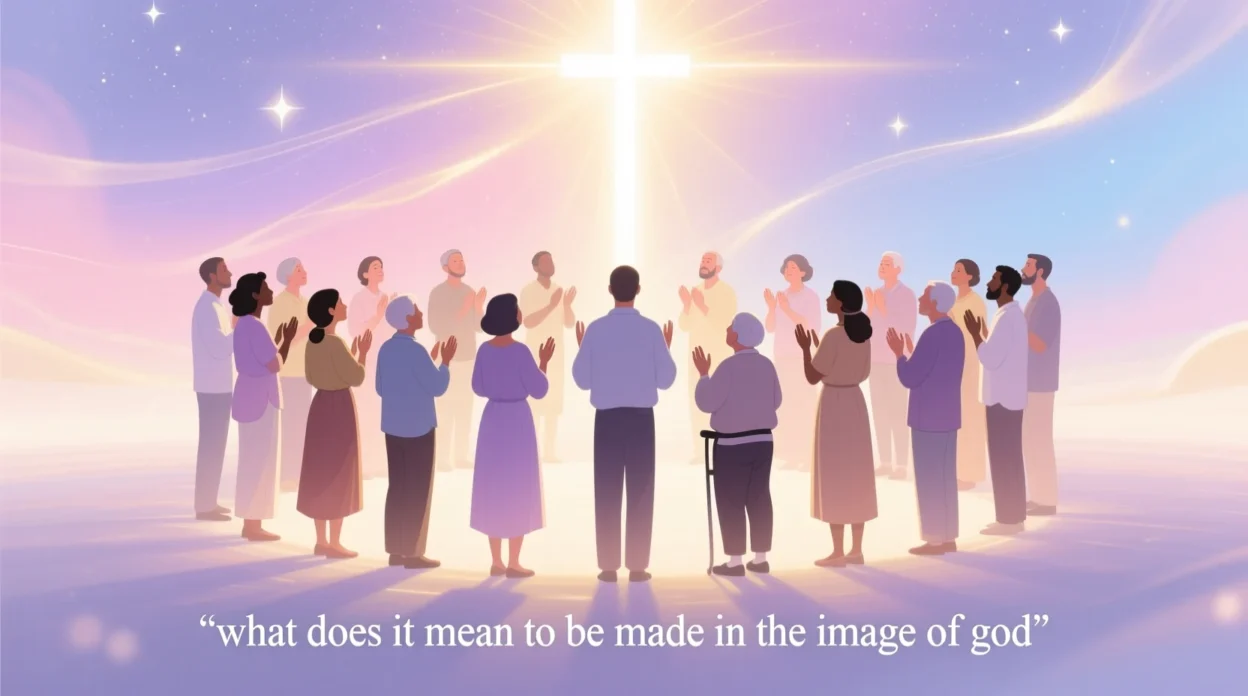
Have you ever heard someone say, “We are made in the image of God”, and paused to think, “Wait, what does that actually mean?” It’s a phrase often mentioned in sermons, Bible studies, or spiritual conversations — but it can feel mysterious or abstract at first.
Quick Answer:
Being made in the image of God means that humans reflect certain qualities of God, such as morality, creativity, reason, love, and the ability to choose. It emphasizes our unique value, dignity, and purpose in creation.
Let’s break down this concept, what it truly means for everyday life, and how it influences how we see ourselves and others.
🧠 What Does “Made in the Image of God” Mean?
The phrase comes from Genesis 1:26–27, which says:
“Then God said, ‘Let us make man in our image, after our likeness.'”
Being made in God’s image (often called Imago Dei) doesn’t mean humans look like God physically. Instead, it points to spiritual, moral, and intellectual qualities that reflect God’s character.
Key aspects include:
- Moral Awareness – The ability to distinguish right from wrong.
- Rational Thought – Humans can reason, plan, and create.
- Relational Capacity – We can love, forgive, and build relationships.
- Spirituality – We can connect with God and understand our purpose.
- Creativity & Stewardship – We can create, care for the world, and make decisions responsibly.
Example:
Just like an artist’s creation reflects the artist, humans reflect God’s qualities in the way we think, love, and make choices.
In short:
👉 Made in God’s image = Humans reflect God’s character, purpose, and moral capacities.
📱 Where Is This Concept Commonly Discussed?
You’ll hear about being made in God’s image in:
- 📖 Bible studies & sermons – foundational Christian teaching.
- 🎓 Religious education – Sunday school or theology classes.
- 💬 Spiritual conversations – encouraging reflection on human dignity.
- 🧘 Devotional content or blogs – exploring purpose and identity.
Tone:
- ✅ Reflective & spiritual
- ✅ Encouraging & inspiring
- 🚫 Casual slang use – this is a serious concept, not casual texting material.
💬 Examples of Being Made in God’s Image
Here are ways this idea plays out in everyday life:
- Moral Choices
- Choosing honesty over lying, reflecting God’s justice.
- Creativity
- Writing, painting, or problem-solving as expressions of God’s creativity.
- Relationships
- Loving and forgiving others, mirroring God’s love.
- Spiritual Awareness
- Praying, worshiping, or seeking purpose in life.
- Care for Creation
- Protecting the environment and helping others, showing stewardship.
Example Scenario:
A person volunteers at a shelter, uses their creativity to start a community garden, and prays for guidance — all reflecting aspects of God’s image.
🕓 When to Reflect on Being Made in God’s Image
✅ When to Embrace It
- During self-reflection or personal growth.
- When making moral decisions or helping others.
- While teaching children or mentoring — encouraging respect for all.
- In moments of prayer or meditation, understanding your purpose.
❌ When Not to Misinterpret It
- Thinking it means humans are superior to God.
- Using it as a reason to look down on others — every human reflects God in some way.
- Ignoring the responsibility that comes with being made in God’s image.
🧾 Comparison Table
| Context | Example | Why It Matters |
|---|---|---|
| Personal Growth | “I will make ethical choices” | Reflects moral awareness |
| Helping Others | Volunteering or mentoring | Shows relational capacity |
| Creativity & Work | Art, writing, or problem-solving | Expresses God’s creative nature |
| Spiritual Practice | Prayer, worship, meditation | Deepens connection with God |
| Environmental Stewardship | Planting trees or cleaning rivers | Reflects care for creation |
🔄 Similar Concepts or Related Ideas
| Concept | Meaning | When to Use / Teach |
|---|---|---|
| Imago Dei | Latin for “Image of God” | Theology, Bible studies, spiritual reflection |
| Human Dignity | Every person has intrinsic value | Ethics, moral teaching |
| Stewardship | Caring for creation responsibly | Environmental care, social responsibility |
| Spiritual Purpose | Understanding your God-given calling | Life coaching, devotion |
| Moral Responsibility | Using free will ethically | Decision-making, leadership |
❓ 5 FAQs About Being Made in the Image of God
1. Does “image of God” mean humans look like God?
No, it refers to spiritual, moral, and relational qualities, not physical appearance.
2. Are all humans made in God’s image?
Yes — every person reflects God’s qualities, giving everyone inherent value and dignity.
3. How does this affect how we treat others?
It encourages respect, kindness, and love because every person carries God’s image.
4. Does this concept apply only in Christianity?
It is most prominent in Christian theology, but similar ideas appear in Judaism and other faiths emphasizing human dignity.
5. Why is this important today?
Understanding this helps us make moral choices, care for creation, and value every human life, even in a complex modern world.
🏁 Conclusion
Being made in the image of God is more than a phrase — it’s a guiding principle for understanding your value, purpose, and how to live in relationship with others.
In short:
👉 Made in God’s image = Humans reflect God’s character, morality, creativity, and relational nature.
When you remember this, you not only see yourself differently but also how you interact with the world and others.


