
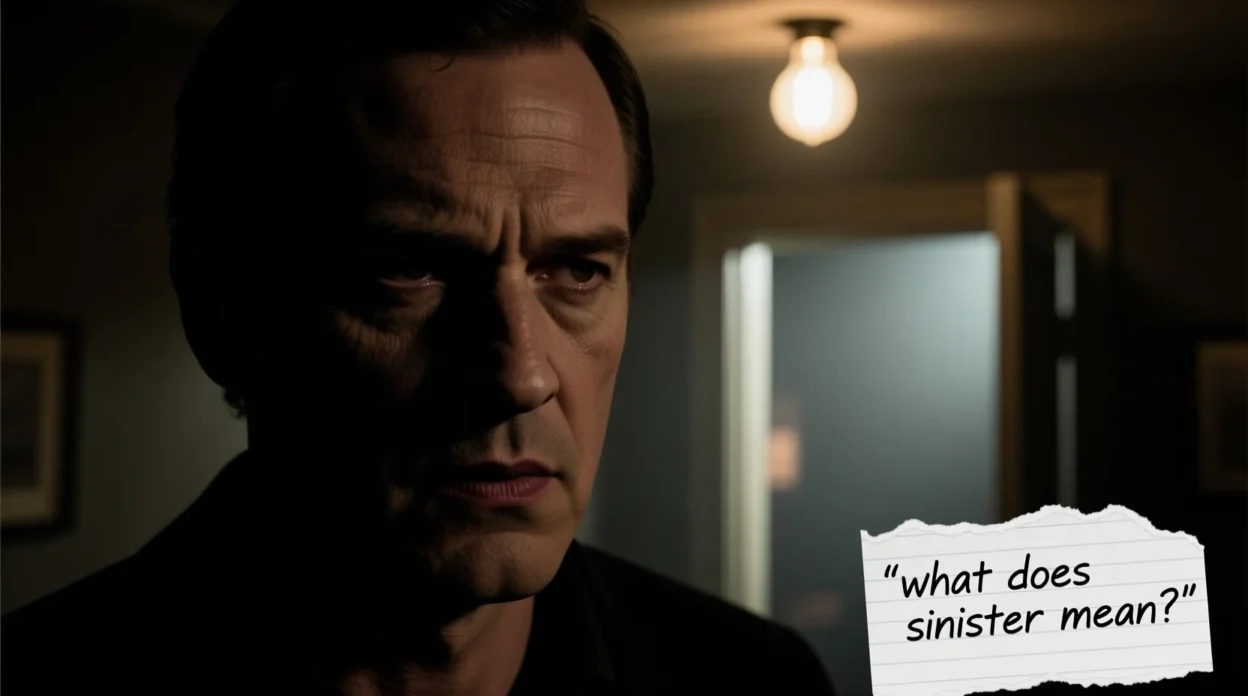
You’ve probably heard someone say something like, “That music sounds sinister,” or maybe seen a movie trailer with the tagline, “A sinister plan unfolds…” But what does sinister actually mean? Is it just a fancy word for “evil,” or is there more to it?
When I first heard it in a crime show, I thought it just meant “scary.” Later, I learned it has a deeper history and meaning — one that goes way beyond spooky vibes.
Quick Answer:
Sinister means “evil,” “threatening,” or “giving the impression that something bad will happen.” It’s often used to describe dark motives, eerie atmospheres, or suspicious actions.
Let’s unpack this mysterious word — its definition, origin, real examples, and how you can use it naturally in speech or writing.
🧠 What Does “Sinister” Mean in English?
The word sinister is an adjective that describes something that seems harmful, dangerous, or evil — either literally or symbolically.
It can refer to:
- Someone’s actions or intentions that appear threatening.
- A situation or atmosphere that feels eerie or unsettling.
- A facial expression or tone that suggests something bad is coming.
Examples:
“He gave me a sinister smile before walking away.”
“The forest grew quiet — it felt strangely sinister.”
In short:
👉 Sinister = Evil / Threatening / Ominous
It’s a word that instantly adds mystery, suspense, or danger to your sentences.
🕰️ The Origin of the Word “Sinister”
Interestingly, sinister didn’t always have a negative meaning.
It comes from the Latin word sinister, meaning “left” or “on the left side.”
In ancient times, the left side was often associated with bad luck or unfavorable omens — a superstition that dates back thousands of years.
That’s why in English, “sinister” eventually evolved to mean unlucky, then evil or menacing.
Fun fact:
In heraldry (the study of coats of arms), “sinister” still literally means “on the left side.”
So, while today we think of it as dark and creepy, its roots are more about superstition than actual evil!
📱 Where Is “Sinister” Commonly Used?
You’ll see or hear sinister in all kinds of contexts — from books and movies to casual conversation.
Here’s where it commonly appears:
- 🎬 Movies & TV Shows: Describing villains or dark atmospheres. “There’s something sinister about that character…”
- 📚 Books & Novels: Especially in thrillers or mysteries. “A sinister plot was slowly unfolding behind the scenes.”
- 📰 News or Articles: To describe suspicious behavior. “Police are investigating a sinister connection between the two crimes.”
- 🗣️ Daily Conversation: Used metaphorically for bad vibes or dark humor. “That laugh was kinda sinister, don’t you think?”
Tone:
- ✅ Serious or dramatic
- 🧩 Figurative (can be used jokingly too)
- 🚫 Not usually used in formal professional settings like business emails
💬 Examples of “Sinister” in Conversation
Here are a few realistic examples showing how “sinister” can fit into everyday speech 👇
A: Did you see his smile when he said that?
B: Yeah, it looked kinda sinister 😳
A: The house was totally dark, and the door creaked open…
B: Okay, that sounds sinister already 😬
A: There’s a sinister side to that company’s marketing.
B: You mean like they’re hiding something?
A: I think the cat’s planning something sinister.
B: 😂 You’ve been watching too many horror movies.
A: The music changed to something slow and sinister.
B: Classic horror scene vibes!
🕓 When to Use and When Not to Use “Sinister”
✅ When to Use
- When describing evil or suspicious behavior.
- When talking about dark, mysterious, or creepy situations.
- In storytelling, movies, or creative writing.
- For sarcastic or humorous exaggerations.
❌ When Not to Use
- In formal or professional communication (e.g., emails, reports).
- When describing regular negative situations (use words like “bad,” “unpleasant,” or “serious” instead).
- If the tone isn’t fitting — using “sinister” for minor things might sound dramatic.
🧾 Comparison Table
| Context | Example Phrase | Why It Works |
|---|---|---|
| Movie Review | “The villain had a sinister presence.” | Matches the dark tone perfectly. |
| Storytelling | “A sinister shadow crept closer.” | Builds suspense and emotion. |
| Joking with Friends | “My cat looks sinister tonight 😹” | Used humorously. |
| Work Email | “The results were unexpected.” | More appropriate tone. |
| Formal Report | “There were irregular findings.” | Clear and neutral phrasing. |
🔄 Similar Words or Synonyms for “Sinister”
Here are some alternatives you can use depending on tone and context 👇
| Word | Meaning | When to Use |
|---|---|---|
| Menacing | Threatening or dangerous | For strong, direct danger |
| Ominous | Suggesting bad things will happen | For atmospheric or suspenseful tone |
| Dark | Evil or mysterious | General and versatile |
| Creepy | Strange or scary in a mild way | Casual or humorous tone |
| Eerie | Weird and unsettling | Ghostly or supernatural settings |
| Foreboding | Predicting something bad ahead | Dramatic writing or storytelling |
These words can often replace “sinister” — but “sinister” still carries a unique blend of evil + mystery that others don’t.
❓ 5 FAQs About “Sinister”
1. Does “sinister” always mean evil?
Not necessarily — it can also mean something that feels threatening or just gives off bad vibes, even if it’s not actually evil.
2. Can “sinister” describe a person?
Yes! You can describe someone’s expression, smile, or actions as sinister if they seem creepy or suspicious.
3. Is “sinister” a negative word?
Yes. It usually carries a dark or threatening connotation.
4. Can I use “sinister” in a funny or lighthearted way?
Absolutely. Many people use it jokingly — like calling a mischievous pet or prank “sinister.”
5. What part of speech is “sinister”?
It’s an adjective. Example: “He had a sinister look.”
🏁 Conclusion
Now you know the real meaning behind the word “sinister.”
It’s more than just a spooky or villainous word — it’s rooted in history, with a touch of superstition and mystery.
Whether you’re describing a creepy scene, a suspicious smile, or a dark plot twist, sinister adds that perfect hint of tension and intrigue.
In short:
👉 Sinister = Evil, Threatening, or Ominous.
Use it wisely — and next time someone calls something “sinister,” you’ll know exactly what kind of mood they’re setting. 😈


