

Have you ever noticed words like believe, beloved, rebellion, or belligerent and wondered if they’re somehow connected? At first glance, they seem totally different. But surprisingly, many of these words share a common origin — the root bel.
Students, language learners, and curious readers often come across this root while studying vocabulary, English literature, or word origins and feel confused. Don’t worry — this guide will break it all down in simple, easy language with examples you’ll actually remember.
Quick Answer:
The root bel means “beautiful,” “good,” or “war,” depending on its Latin origin and context. It plays a key role in many common English words.
🧠 What Does the Root Bel Mean?

The root bel comes from Latin, and interestingly, it has two main meanings depending on the word:
1️⃣ Bel = Beautiful / Good
From Latin bellus, meaning pretty, fine, or lovely.
Examples:
- Beloved → someone dearly loved
- Belle → a beautiful woman
- Belief → something you hold as good or true
2️⃣ Bel = War
From Latin bellum, meaning war or conflict.
Examples:
- Belligerent → aggressive or warlike
- Rebellion → uprising or armed resistance
- Bellum → Latin word for war
In short:
Bel = beautiful / good OR war, depending on the word’s origin and usage.
📚 Common Words That Use the Root Bel
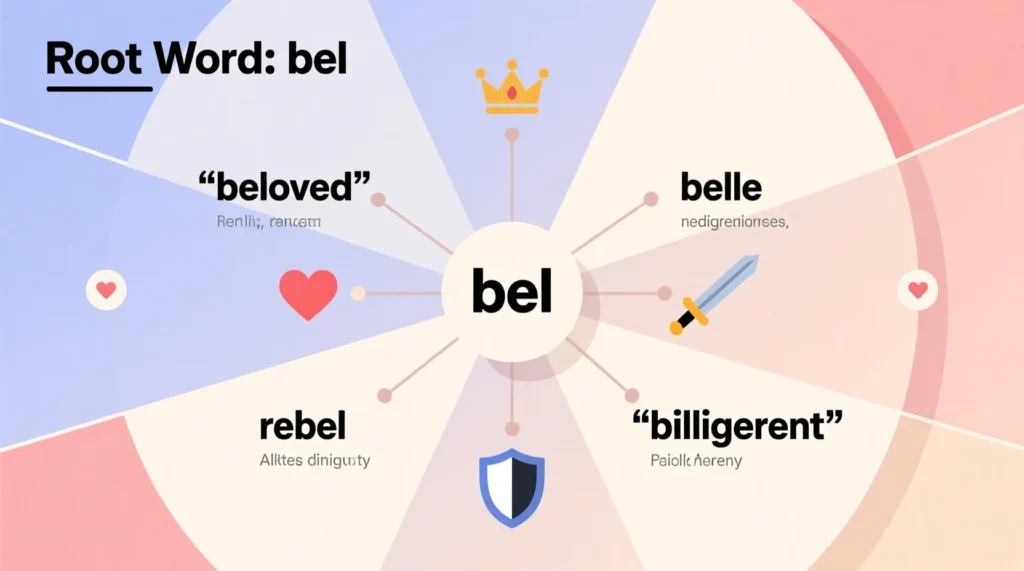
Here are some popular English words built using the root bel:
| Word | Meaning | Root Usage |
|---|---|---|
| Beloved | Dearly loved | Beautiful / good |
| Believe | To accept as true | Good / worthy |
| Rebel | One who resists authority | War |
| Belligerent | Hostile or aggressive | War |
| Belle | A beautiful woman | Beautiful |
This shows how one root can create very different meanings depending on context.
📱 Where Is the Root Bel Commonly Studied?

You’ll most often see the root bel in:
- 📖 English vocabulary lessons
- 🎓 SAT, GRE, and competitive exams
- ✍️ Literature and poetry analysis
- 🧠 Word-building and etymology studies
- 🏫 Middle school & high school English classes
Tone: Educational
Usage: Academic and learning-focused
Formality: Neutral to formal
💬 Examples of the Root Bel in Sentences
Here are simple sentences showing how bel works in real language:
- She is deeply beloved by her family.
- He strongly believes in honesty.
- The country faced a violent rebellion.
- His belligerent behavior caused trouble.
- The belle of the ball wore a red dress.
Each example shows how the root bel shapes the word’s meaning.
🕓 When to Use Words With the Root Bel
✅ When to Use
- Academic writing
- Vocabulary building
- Essays and exams
- Clear descriptive language
❌ When Not to Use
- Casual texting (some words sound formal)
- Informal chats (e.g., “belligerent” may sound harsh)
- Without understanding context
Comparison Table
| Context | Example Word | Why It Works |
|---|---|---|
| Essay | Belligerent | Precise meaning |
| Poetry | Beloved | Emotional tone |
| Exam | Rebellion | Historical accuracy |
| Text Chat | Loved | Simpler alternative |
🔄 Related Roots and Similar Meanings
| Root | Meaning | Example |
|---|---|---|
| Am | Love | Amore, amiable |
| Bon | Good | Bonus, bonfire |
| Bell | War | Belligerent |
| Pulch | Beautiful | Pulchritude |
These roots help expand your word-power even further.
❓ FAQs About the Root Bel
1. Is bel always related to beauty?
No. It can also relate to war, depending on the word.
2. Is “believe” related to beauty?
Indirectly — it comes from believing something is good or true.
3. Is bel Latin or Greek?
It comes mainly from Latin.
4. Does bel appear in modern English?
Yes, in many everyday words.
5. Is bel used as a prefix or root?
Mostly as a root, sometimes as part of a prefix.
6. Why does bel have two meanings?
Because it comes from two different Latin words: bellus and bellum.
📝 Mini Quiz – Test Your Knowledge
1. What does the root bel mean?
a) Water
b) Beautiful or war ✅
c) Light
2. Which word uses bel meaning “war”?
a) Beloved
b) Belligerent ✅
c) Belle
3. “Belle” refers to:
a) Conflict
b) Beauty ✅
c) Law
4. Which word means uprising?
a) Believe
b) Rebel ✅
c) Belle
5. The root bel comes from:
a) Greek
b) Latin ✅
c) French
📝 Conclusion
The root bel is a powerful building block in English vocabulary. Whether it represents beauty and goodness or conflict and war, understanding this root helps you decode unfamiliar words faster and expand your language skills. Once you know bel, dozens of English words suddenly make a lot more sense.

