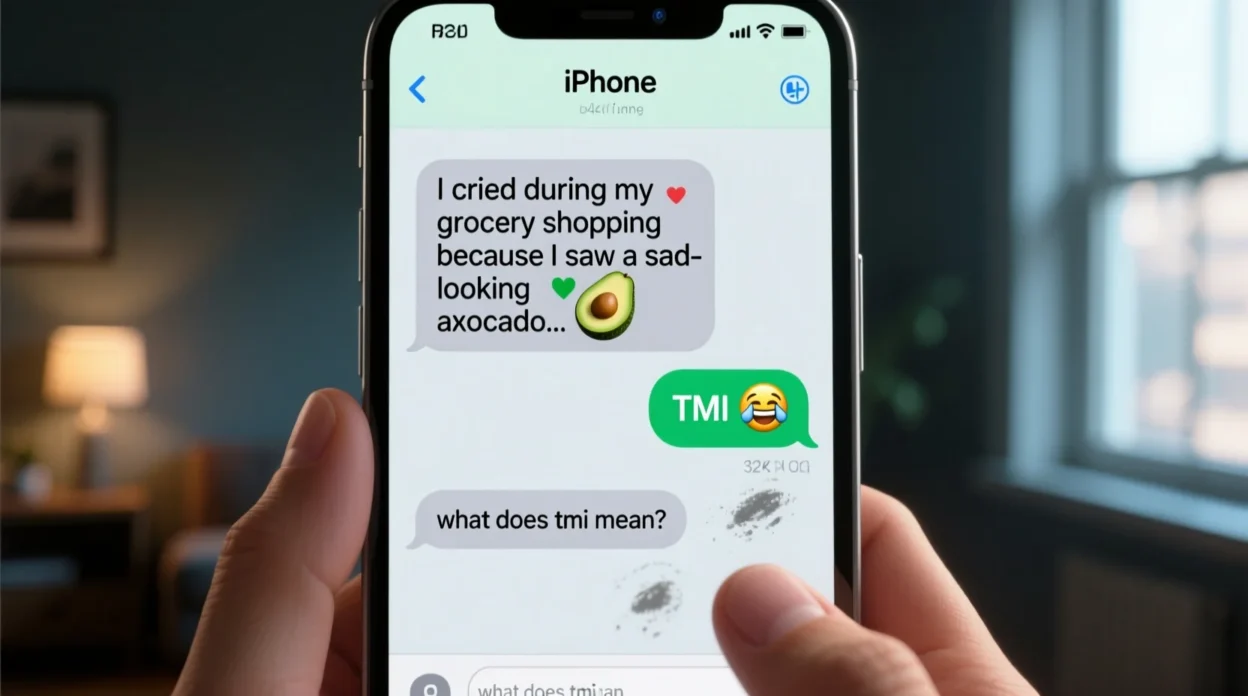
You’re scrolling through a group chat, reading messages, when someone suddenly replies with “TMI!” You pause for a second and think, “Wait… what does that mean?” If you’ve ever felt confused seeing TMI in texts, comments, or social media replies, you’re not alone. This slang term is extremely common online, especially when conversations get a little too personal.
In this article, we’ll explain what TMI means in text, when to use it, when to avoid it, real conversation examples, similar slang alternatives, FAQs, and even a mini quiz at the end.
Quick Answer:
TMI means “Too Much Information.” It’s a casual and sometimes humorous way to say someone shared more details than necessary, especially about personal topics.
🧠 What Does TMI Mean in Text?
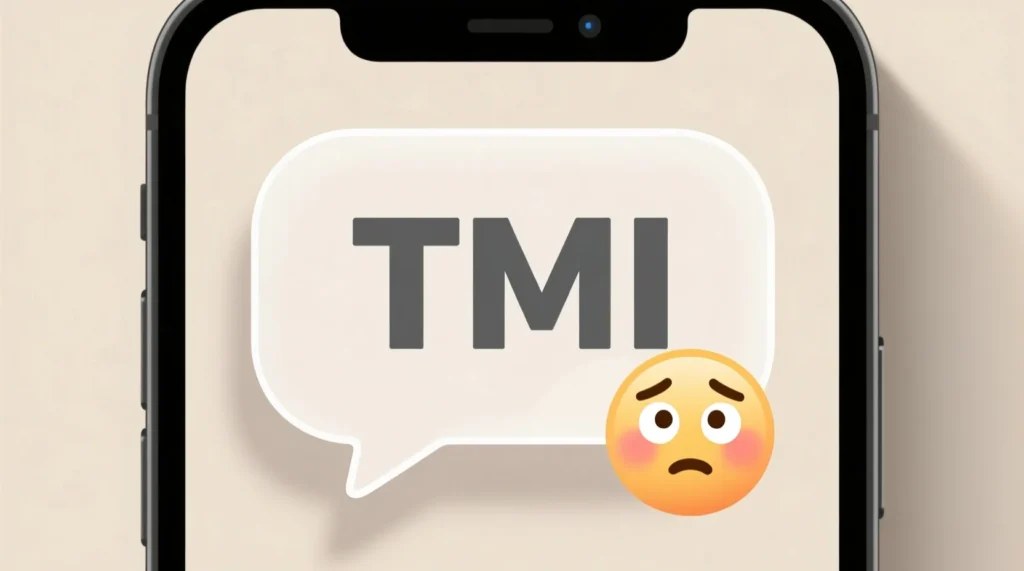
TMI stands for “Too Much Information.” People use it when someone shares something overly personal, awkward, or unnecessary — usually related to health, relationships, or private situations.
It can be used in:
- A joking way
- A slightly uncomfortable way
- Or as a polite hint to stop oversharing
Example Sentence:
“Okay… that’s TMI 😅”
In short:
TMI = Too Much Information = You shared more than needed.
📱 Where Is TMI Commonly Used?
You’ll see TMI used frequently on:
- Text messages 📱
- Snapchat chats 👻
- Instagram comments & DMs 📸
- TikTok replies 🎵
- Group chats 💬
Tone: Casual / playful
Formality: Informal ❌
Professional use: No
TMI is not appropriate for emails, work chats, or formal conversations.
💬 Examples of TMI in Conversation
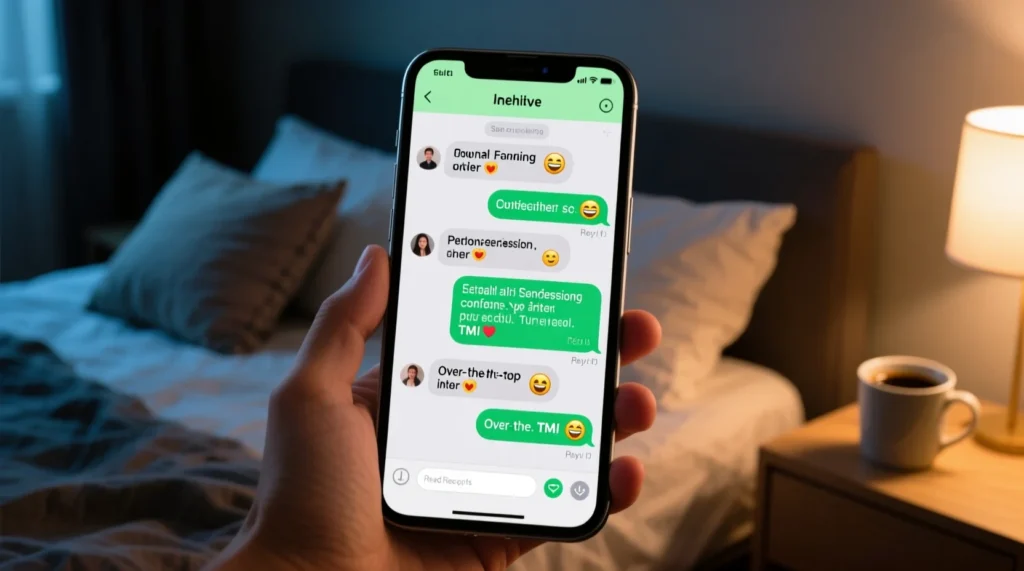
Here are realistic examples showing how TMI is used naturally:
A: I’ve been sick all night and throwing up 🤢
B: Okayyy TMI 😅
A: I haven’t showered in three days
B: TMI bro 💀
A: My doctor said my stomach issues are because—
B: TMI! Please stop 😭
A: Guess what happened in the bathroom today…
B: Nope. TMI 🙅♂️
A: My breakup details are kinda messy
B: Yeah… that’s TMI 😬
A: I just wanted to be honest
B: I get it, but TMI 😄
🕓 When to Use and When NOT to Use TMI
✅ When to Use TMI
- When someone overshares personal details
- In casual chats with friends
- As a lighthearted reaction
- In humorous or awkward situations
❌ When Not to Use TMI
- In professional or work-related chats
- When someone is being serious or emotional
- In formal conversations
- When empathy is more appropriate
Comparison Table:
| Context | Example Phrase | Why It Works |
|---|---|---|
| Friend Chat | “TMI 😅” | Casual & humorous |
| Work Chat | “Let’s keep this professional.” | Polite |
| “That detail isn’t necessary.” | Formal | |
| Serious Talk | “I understand.” | Empathetic |
🔄 Similar Slang Words or Alternatives
| Slang | Meaning | When to Use |
|---|---|---|
| Oversharing | Sharing too much | Casual explanation |
| Yikes | Awkward reaction | Informal |
| Cringe | Embarrassing info | Casual chats |
| Nope | Stop / uncomfortable | Friendly refusal |
| Awkward | Uncomfortable moment | Informal |
| Too personal | Direct alternative | Polite tone |
❓ FAQs About TMI
1. Is TMI rude?
Not usually — it depends on tone and context.
2. Can TMI be funny?
Yes, it’s often used jokingly.
3. Is TMI offensive?
Rarely. It’s more playful than insulting.
4. Can I say TMI to strangers?
Better with friends; strangers may take it negatively.
5. Is TMI still popular slang?
Yes, it’s widely used online and in texting.
6. Does TMI only apply to gross topics?
No — it applies to any overly personal detail.
📝 Mini Quiz – Test Your Knowledge
1. What does TMI stand for?
a) Tell Me Instantly
b) Too Much Information ✅
c) Text Message Incoming
2. TMI is best used in:
a) Formal emails
b) Casual chats ✅
c) Job interviews
3. TMI usually reacts to:
a) Oversharing ✅
b) Greetings
c) Compliments
4. Is TMI professional language?
a) Yes
b) No ✅
5. Which is a similar phrase to TMI?
a) Oversharing ✅
b) Kindly note
c) Dear sir
📝 Conclusion
TMI is a common slang term used in texting and social media to point out when someone shares more information than necessary. It’s casual, sometimes funny, and works best among friends or peers. Just remember — while it can lighten the mood, it’s not always appropriate in serious or professional conversations.
Now that you know what TMI means in text, you’ll understand exactly why people react with it — and when not to use it.