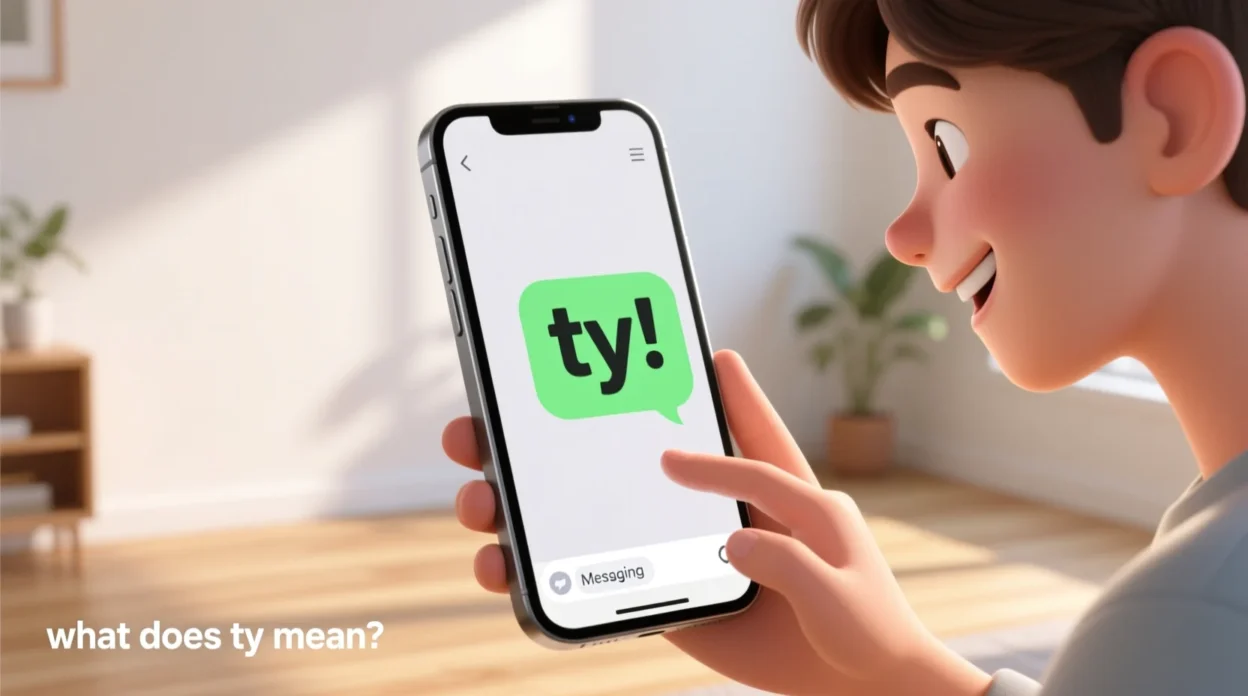
Have you ever texted someone something nice, helpful, or meaningful—and all you got back was a short “ty”? For a second, you pause and think, Is that a good thing? A bad thing? Did they just cut the conversation short? Trust me, you’re not alone. Slang like TY appears everywhere in texting, Snapchat, Instagram, and even in quick work chats. And if you’re unfamiliar with these abbreviations, they can feel confusing or even rude.
But don’t worry. You’re about to understand exactly what TY means in text, how to use it naturally, and what to expect when someone sends it to you.
Quick Answer:
“TY” means “Thank You.” It’s a quick, polite, and casual way of expressing gratitude in text.
🧠 What Does TY Mean in Text?
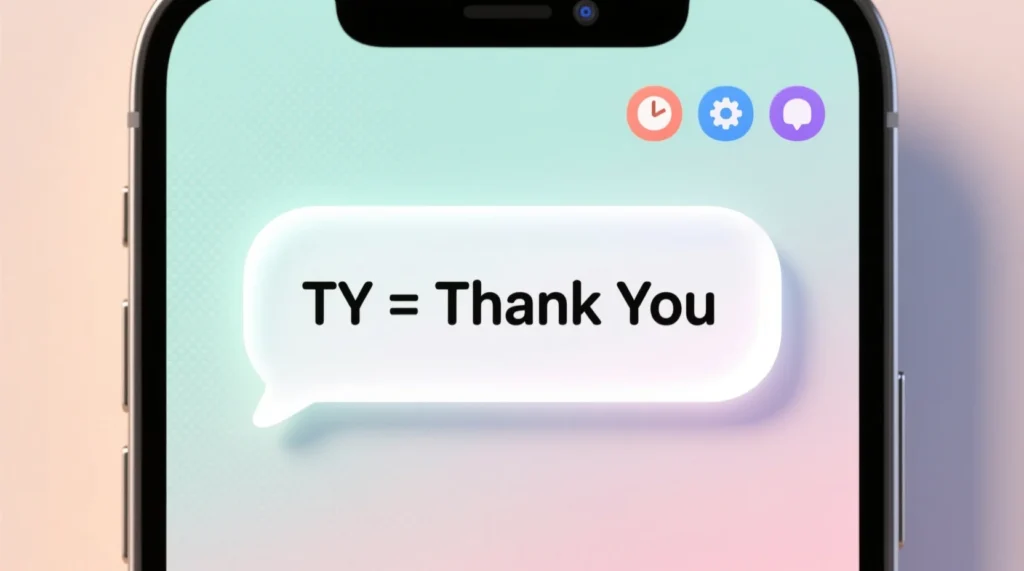
TY stands for “Thank You.” It’s one of the simplest and most widely used abbreviations to show appreciation online. People use it when they want a fast, casual reply without typing the full phrase.
Example Sentence:
“Thanks for sending the notes earlier — ty!”
In short: TY = Thank You = A quick way to show appreciation.
📱 Where Is TY Commonly Used?

You’ll find TY everywhere casual communication happens:
- 📱 WhatsApp chats
- 👻 Snapchat
- 📷 Instagram DMs
- 🧵 Twitter/X replies
- 🎮 Gaming chats
- 💬 Group conversations
- 🙂 Daily texting
Tone:
TY is polite, friendly, casual — perfect for informal and semi-formal chats.
💬 Examples of TY in Conversation
Here are realistic examples that match modern texting tone:
1.
A: “I sent you the file.”
B: “Got it, ty!”
2.
A: “I covered your shift today.”
B: “Omg ty so much 😭”
3.
A: “Your outfit looks great!”
B: “Aw ty!! 💕”
4.
A: “I saved you a seat.”
B: “Ty dude 😄”
5.
A: “Don’t forget your keys!”
B: “Ty for the reminder!”
6.
A: “Here’s the homework answer.”
B: “Ty, really needed it!”
7.
A: “I ordered food for both of us.”
B: “Ty, you’re the best!”
🕓 When to Use and When NOT to Use TY
✅ When to Use TY
- When thanking friends or classmates
- When replying quickly in chats
- When someone sends info, files, or reminders
- When you want a short, polite reply
- In casual team messages
❌ When NOT to Use TY
- In formal emails
- When speaking to professors or clients
- In serious or professional communication
- When providing customer service
- When showing deep or emotional gratitude
📊 Comparison Table
| Context | Example Phrase | Why It Works |
|---|---|---|
| Friend Chat | “tyyy you’re amazing!” | Casual & friendly |
| Work Chat | “Thank you.” | Professional tone |
| “Thank you for your response.” | Clear & formal | |
| Gaming | “Won the round, ty!” | Fast-paced chat |
🔄 Similar Slang or Alternatives
| Slang | Meaning | When to Use |
|---|---|---|
| Tysm | Thank You So Much | Extra gratitude |
| Thx | Thanks | Casual, friendly |
| TQ | Thank You | Asian texting slang |
| TYVM | Thank You Very Much | Polite, extra emphasis |
| ILY | I Love You | When gratitude is deep/emotional |
| BRB | Be Right Back | Not related but often seen together |
❓ FAQs About TY
1. Is TY polite?
Yes! It’s polite and friendly — perfect for casual chats.
2. Does TY mean someone is annoyed?
No. It’s neutral or positive unless their tone says otherwise.
3. What’s more formal: TY or Thanks?
“Thanks” is slightly more formal. “Thank you” is fully formal.
4. Is TY flirty?
It can be if paired with emojis like “tyyy 💗”.
5. What’s the difference between TY and TYS
Nothing — TYS isn’t commonly used. Most stick to TY, Tysm, or Thx.
6. Is TY okay in work chats?
Yes, if the environment is casual. Otherwise use “Thank you.”
📝 Mini Quiz – Test Your Knowledge
1. TY stands for:
a) Try You
b) Thank You ✅
c) Talk You
2. TY is used in:
a) Formal emails
b) Casual texting ✅
c) Legal contracts
3. Which is stronger?
a) TY
b) TYSM ✅
4. TY tone is:
a) Rude
b) Friendly & polite ✅
c) Formal
5. Where do people use TY the most?
a) WhatsApp, Snapchat, Instagram DMs ✅
b) School assignments
c) Newspaper articles
📝 Conclusion
Whether you see it in DMs, comments, or quick responses, TY is one of the easiest and most common ways to say thank you online. It’s short, polite, and perfect for fast conversations. Just remember — while TY works great in friendly chats, you should switch to “Thank you” when the situation becomes formal or professional.
Now, the next time someone texts “ty!”, you’ll know exactly what they mean — and how to reply naturally.