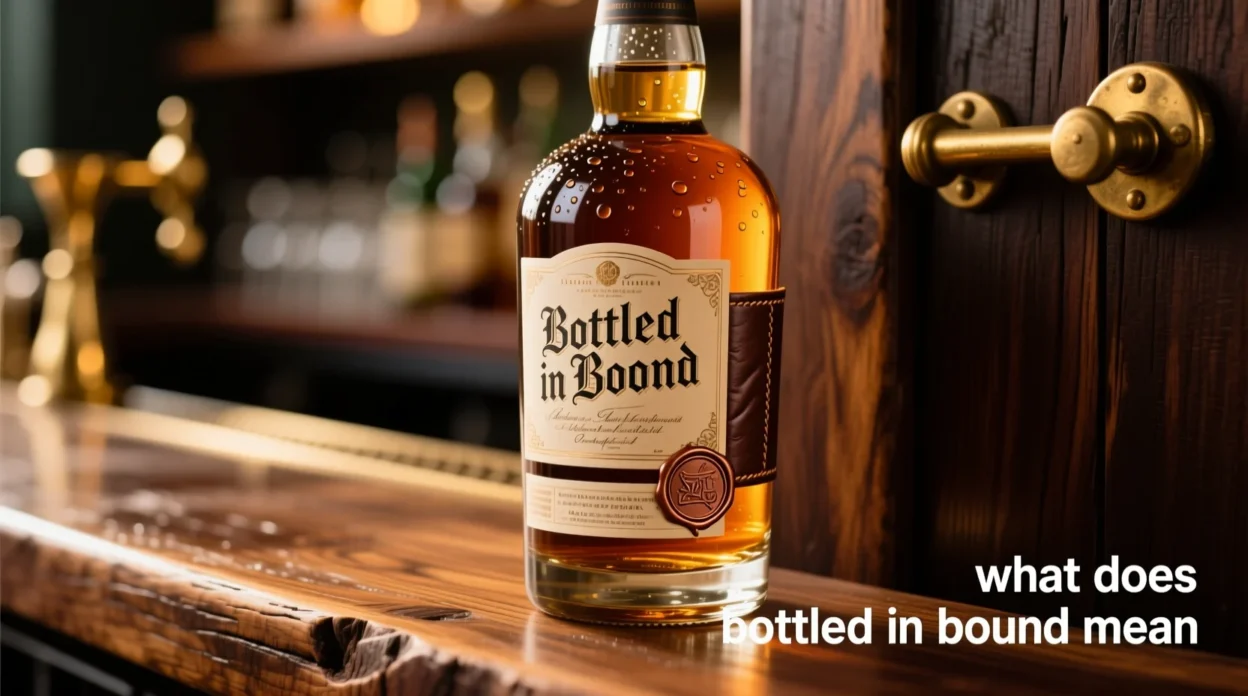
If you’ve ever picked up a whiskey bottle and noticed the term “Bottled in Bond” stamped across the label, you’re not alone. Many people—especially new whiskey fans—wonder what it actually means and whether it makes the whiskey better, stronger, or just more “authentic.”
I remember the first time I saw it on a fancy bourbon bottle and thought, Is this a certification? A flavor? A grade? If you’ve had that same moment, this article is tailored for you.
Whether you’re a casual drinker, collector, bartender, or simply whiskey-curious, let’s break it down in a simple, friendly way.
Quick Answer
“Bottled in Bond” (BiB) means the whiskey follows strict government rules for purity and quality, originating from the Bottled-in-Bond Act of 1897.
It guarantees the spirit is made in one season, by one distiller, aged 4+ years, and bottled at 100 proof (50% ABV).
It’s basically the OG quality seal for American whiskey.
🧠 What Does “Bottled in Bond” Mean?
“Bottled in Bond” refers to a legally protected label designation established by the U.S. government to ensure a whiskey is genuine, unadulterated, and consistently produced.
To carry this label, a whiskey must follow these rules:
✔️ Produced in ONE distillation season
(Season 1: Jan–June, Season 2: July–Dec)
✔️ From ONE distiller at ONE distillery
No blending across facilities.
✔️ Aged at least 4 years
In a federally bonded warehouse.
✔️ Bottled at exactly 100 proof
That’s 50% alcohol.
✔️ Must list the distillery on the label
Transparency is required.
Example Sentence
“Make sure you try that bottled-in-bond bourbon—its 100-proof strength makes the flavor deeper and richer.”
Bold Summary Line
In short: Bottled in Bond = strict quality rules + 100 proof + aged 4+ years + made by one distiller in one season.
📱 Where Is “Bottled in Bond” Commonly Used?
You’ll often see or hear this term in:
- 🥃 Whiskey bottles and labels
- 📺 Whiskey reviews / YouTube tasting shows
- 🍸 Bar menus
- 🛒 Liquor store sections
- 💬 Whiskey Facebook groups & Reddit threads
- 🎙️ Podcasts about bourbon or spirits
Tone of Use:
- ✔️ Casual for whiskey conversations
- ✔️ Enthusiast-level for collectors and drinkers
- ❌ Not used in formal writing outside beverage industry
💬 Examples of “Bottled in Bond” in Real Conversations
A: “Is that good bourbon?”
B: “Yeah, it’s bottled in bond—solid quality.”
A: “Why is this one stronger?”
B: “Because it’s bottled in bond, so it’s always 100 proof.”
A: “Is BiB worth the price?”
B: “Absolutely. You know exactly what you’re getting.”
A: “What makes this rye special?”
B: “It’s bottled in bond, so it meets government standards.”
A: “Should I try bottled-in-bond first?”
B: “Yes, it’s a great starting point.”
A: “Is this the same as high-proof whiskey?”
B: “Related, but BiB has rules—it’s not just strong.”
🕓 When to Use and When Not to Use “Bottled in Bond”
✔️ Use It When:
- Talking about whiskey quality
- Describing a bottle’s strength
- Comparing whiskies at a bar
- Explaining why a bottle tastes richer
- Recommending whiskey to beginners
❌ Do NOT Use It When:
- Talking about non-whiskey spirits
- Describing flavor alone
- Referring to blended whiskey
- Talking about proof that isn’t 100
- Discussing wine, beer, or cocktails
Comparison Table
| Context | Example Phrase | Why It Works |
|---|---|---|
| Friend Chat | “Try this—it’s bottled in bond, super smooth.” | Casual & informative |
| Bar Setting | “Do you have any bottled-in-bond bourbons?” | Fits whiskey terminology |
| Work Email | “This whiskey meets specific production standards.” | “BiB” is too casual |
| Professional Review | “Certified bottled-in-bond rye whiskey.” | Industry-appropriate |
| Social Media | “BiB bottles hit different 😤🔥” | Slang-friendly |
🔄 Similar Slang or Alternatives
| Term | Meaning | When to Use |
|---|---|---|
| Straight Bourbon | Whiskey aged 2+ years | Talking general quality |
| Single Barrel | Whiskey from one barrel | Discussing rare/unique bottles |
| Small Batch | Blended from few barrels | Comparing production styles |
| Cask Strength | Bottled at natural proof | When discussing strong whiskey |
| 100 Proof | 50% ABV | Talking strength without BiB rules |
| Aged X Years | Aging statement | Focus on maturity, not rules |
❓ FAQs About “Bottled in Bond”
1. Is bottled in bond better than regular whiskey?
Often yes—it’s more regulated and typically higher quality, but taste preference matters.
2. Is bottled in bond always 100 proof?
Yes. This is a legal requirement.
3. Can other spirits be bottled in bond?
Yes—rum, brandy, and vodka can be, but whiskey is most common.
4. What makes BiB whiskey taste different?
The 100-proof strength and minimal blending create bolder flavors.
5. Is “bottled in bond” the same as “single barrel”?
No. Single barrel is from one barrel; BiB follows government rules.
6. Is BiB whiskey expensive?
Not always—many affordable options are bottled in bond.
📝 Mini Quiz – Test Your Knowledge
1. What proof must bottled-in-bond whiskey be?
a) 80
b) 90
c) 100 ✅
2. How long must BiB whiskey be aged?
a) 2 years
b) 4 years ✅
c) 6 years
3. What law created the BiB category?
a) Whiskey Act of 1910
b) Bottled-in-Bond Act of 1897 ✅
c) Prohibition Law
4. Which of these is NOT a requirement?
a) One distillation season
b) One distiller
c) Single barrel ✅
5. What ABV is bottled-in-bond?
a) 40%
b) 45%
c) 50% ✅
🏁 Conclusion
“Bottled in Bond” might look like a fancy phrase, but now you know exactly what it means—and why whiskey fans love it.
It guarantees authenticity, purity, transparency, and consistency, all backed by regulations that have been around for over a century.
If you’re exploring the whiskey world, BiB bottles are one of the best, safest, and most flavorful places to start.
Cheers! 🥃