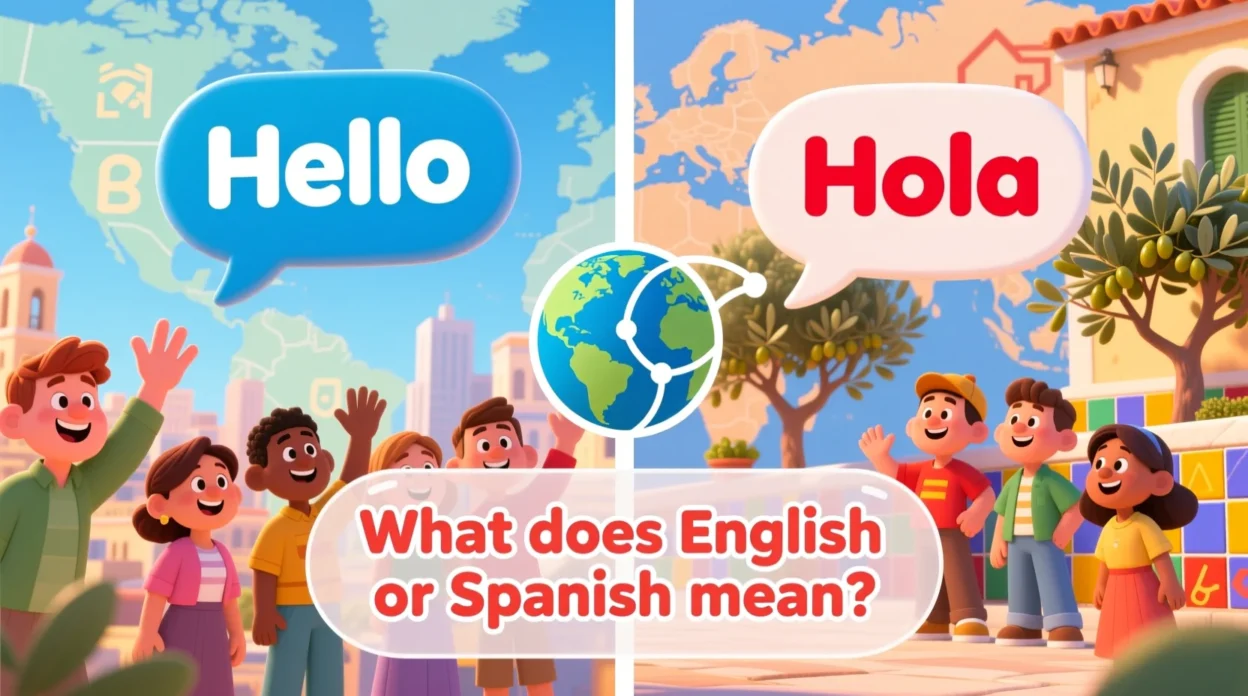
Have you ever seen someone ask, “Is this English or Spanish?” while reading a text, post, or message, and wondered what exactly they meant? Many people confuse the languages themselves or want to know which is being used, especially in texting, social media, or online conversations.
In this guide, you’ll learn what English and Spanish mean, how they are different, where each is used, examples, common questions, and even a short mini quiz. By the end, you’ll easily recognize and understand both languages in context.
Quick Answer:
English is a widely spoken language originating from England, used globally. Spanish is a Romance language from Spain, also spoken worldwide. Both are used in texting, social media, and conversation, but each has its own vocabulary, grammar, and style.
🧠 What Does English Mean?
English is a Germanic language that originated in England and is now widely used around the world. It is the primary language of communication in countries like the United States, United Kingdom, Canada, Australia, and many others.
Example in a sentence:
“She wrote the email in English so that everyone could understand.”
In short:
English = Language originating from England = Widely spoken globally.
🧠 What Does Spanish Mean?
Spanish is a Romance language that originated in Spain. It is now spoken in many countries across Europe, Latin America, and even the United States. Spanish is known for its melodic sounds and clear grammar rules, making it popular for communication, music, and literature.
Example in a sentence:
“He sent a message in Spanish to his friend in Mexico.”
In short:
Spanish = Language originating from Spain = Spoken widely in Europe and Latin America.
📱 Where Are English and Spanish Commonly Used?
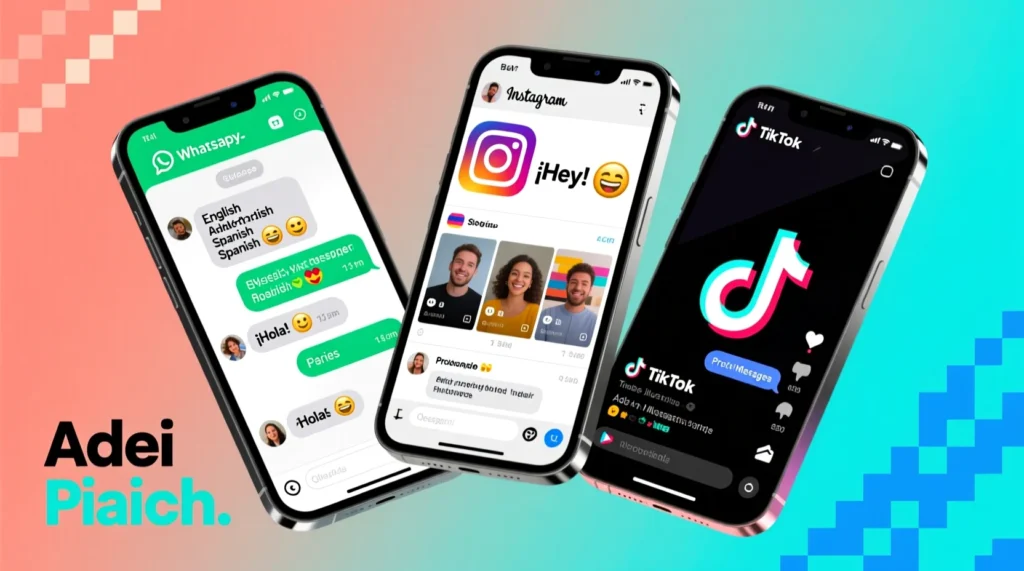
Both languages appear frequently in texting, social media, and online content. Here’s where you might see each:
- English 📱 — Email, WhatsApp, Instagram, TikTok, websites, memes
- Spanish 📱 — WhatsApp, Facebook, Instagram, TikTok, Spanish-language blogs
Tone: Both can be casual or formal depending on the context.
Formality: English is often used in professional content; Spanish varies from casual chats to formal writing.
💬 Examples of English and Spanish in Conversation
- English:
A: Hey, how’s your day?
B: Pretty good! You? - Spanish:
A: Hola, ¿cómo estás?
B: Muy bien, gracias. ¿Y tú? - English & Spanish mix (common in bilingual texts):
A: Vamos al cine tonight?
B: Sure! Sounds fun 😄 - English:
A: Can you send me the report?
B: Already done! - Spanish:
A: ¿Me puedes enviar el informe?
B: ¡Claro, ya lo envié!
These examples show how language choice depends on audience, context, and familiarity.
🕓 When to Use English or Spanish
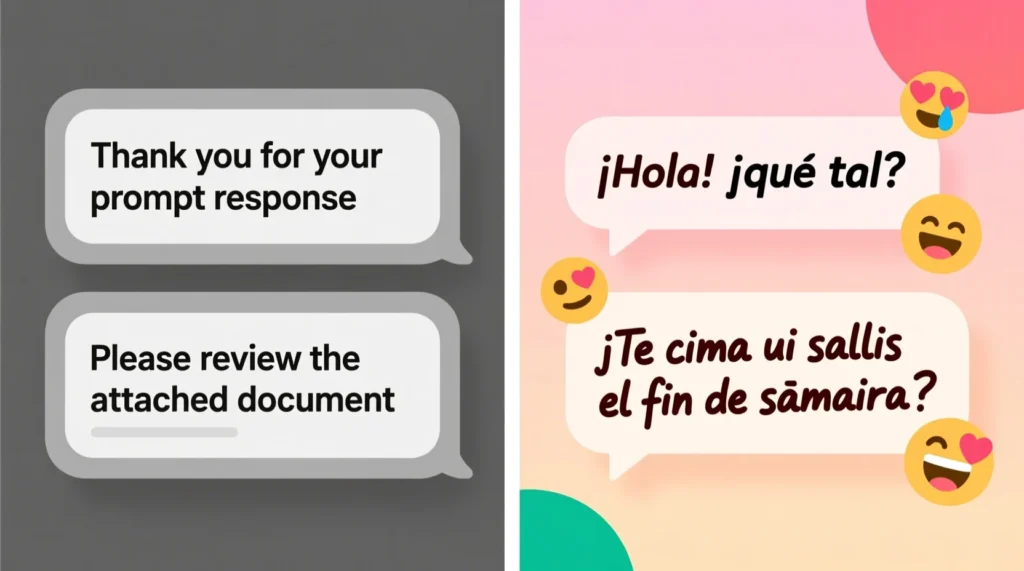
✅ When to Use English
- Communicating internationally
- Professional or formal messages
- On global social media platforms
✅ When to Use Spanish
- Talking to Spanish-speaking friends
- In Latin American or Spanish community contexts
- For cultural or regional content
❌ When Not to Use Each
- Avoid English in exclusive Spanish-only chats if others may not understand
- Avoid Spanish in professional English communications unless bilingual support exists
Comparison Table:
| Context | English Example | Spanish Example | Why It Works |
|---|---|---|---|
| Friend Chat | “Hi! What’s up?” | “¡Hola! ¿Qué tal?” | Casual greeting |
| Work Chat | “Please review the report.” | “Por favor revise el informe.” | Professional & clear |
| Social Media | “Check this out!” | “¡Mira esto!” | Friendly, engaging |
🔄 Similar Terms or Language Variations
| Language | Meaning | When to Use |
|---|---|---|
| English | Global language from England | International communication |
| Spanish | Language from Spain, spoken widely | Latin America, Spain, bilingual contexts |
| Spanglish | Mix of English & Spanish | Informal, bilingual texting |
| Catalan | Regional language in Spain | Spain-specific regional content |
| Latin English | English used with Latin roots or context | Educational or cultural use |
❓ FAQs About English or Spanish
1. Is Spanish harder to learn than English?
It depends on your native language, but both have clear rules and common patterns.
2. Can I mix English and Spanish in texting?
Yes, this is often called Spanglish, common among bilingual users.
3. Is English universal?
It is widely spoken globally but not everyone knows it.
4. Can Spanish be formal?
Yes, Spanish has formal and informal forms, just like English.
5. Are emojis universal in English or Spanish chats?
Yes, emojis are commonly used across both languages.
6. How do I know which language someone is using?
Look for familiar words, accents (á, é, ñ), or sentence structures.
📝 Mini Quiz – Test Your Knowledge
1. English is originally from:
a) Germany
b) England ✅
c) Spain
2. Spanish is a:
a) Germanic language
b) Romance language ✅
c) Slavic language
3. “Hola” means:
a) Hello ✅
b) Bye
c) Please
4. Mixing English and Spanish in texts is called:
a) Spanglish ✅
b) Engspan
c) Latin English
5. English is commonly used in:
a) International emails ✅
b) Only Spain
c) Only Latin America
📝 Conclusion
Both English and Spanish are widely used languages in texting, social media, and conversation. Knowing what each means and how to use them appropriately will make communication easier, especially in bilingual or international contexts. Whether you’re sending a message, writing a post, or learning a new language, understanding the differences helps you connect with others effectively.